30-SECOND READ — IS THIS FOR YOU?
In one line. Dubai luxury (AED 20M+) keeps growing on paper — Palm Jumeirah is up 31% year on year and Knight Frank forecasts +5% in 2026 — but Q3 2025 saw a 19% drop in luxury transaction volume, which is the figure worth understanding before assuming the trend continues unchanged.
Best for. Buyers weighing prime Dubai entry against alternatives like London, Singapore, or Monaco; existing luxury holders thinking about a sell-into-strength window.
What you will learn.
• The current per-sqm pricing in Emirates Hills, Palm Jumeirah, and District One
• Why the volume drop matters more than the headline price growth
• The supply-constrained sub-markets that defend value best
Bottom line. The Dubai luxury story is real but increasingly concentrated. The question is not whether the segment is overheated — it is whether the buyer base is wide enough to absorb a slowdown in any one origin market.
IN THIS ARTICLE
- The Numbers Behind the Story
2. Three Things the Data Does Not Show
3. Where Dubai Luxury Defends Value Best
4. How to Decide From Here
The Numbers Behind the Story
Dubai luxury, defined here as transactions above AED 20 million, has been the fastest-growing global prime market for three consecutive years. Knight Frankʼs February 2026 Prime Outlook (reported via Arabian Business) forecasts a further 5% price gain across the UAE prime segment in 2026, on top of cumulative growth that put 2025 well into double digits for the standout sub-markets.
The standout figure is Palm Jumeirah, which recorded a 31% annual increase in average sold prices through 2025 — the highest growth rate of any global prime location Knight Frank tracks. Dubai Marina ran second among local prime markets at 15%. Compared to one year ago, the citywide prime index sits roughly 10-13% higher in nominal terms (Sands of Wealth, January 2026 data).
At the unit level, the entry prices speak to the segmentʼs structural exclusivity. Emirates Hills villas trade in the range of AED 90,000 to 180,000 per square metre — with the upper tail driven by ultra-prime resales where supply is essentially zero. Palm Jumeirah waterfront villas sit at AED 28,000 to 45,000 per square metre, depending on frond, view, and finish level. A 5,000-7,000 square foot Palm villa or Emirates Hills home in 2026 typically transacts in the AED 7.5 million to 25 million range, with ultra-prime resales clearing well above that ceiling.
| Indicator | 2025 Result | 2026 Outlook |
|---|---|---|
| Palm Jumeirah Average Sold Price | +31% YoY | +5% (moderating growth) |
| Dubai Marina Prime Prices | +15% YoY | Up, but moderate |
| Palm Jumeirah Transaction Count (Q3 2025) | −19% QoQ | Watch indicator |
| Citywide Prime Residential Index (Jan 2026) | +10–13% YoY | Slowing |
The figure that complicates the picture is the Palm Jumeirah Q3 2025 transaction count, which fell 19% versus Q2 even as average prices held flat. Two things can be true at once: prices keep rising on resale comparables, and fewer homes are actually changing hands. Lower turnover at higher prices is the classic pattern of homes being held for longer holds — or of a buyer base getting selective.
Three Things the Data Does Not Show
The headline price growth is real. What the headline does not surface is where the segment is structurally exposed.
Buyer concentration is the real risk. Volume from a thin pool of buyers is more fragile than volume from a wide one — even at the same headline price. The 2024-2025 luxury surge ran on Russian, UK, Indian, and increasingly Chinese capital. If any one origin market pulls back — sanctions shift, tax treaty changes, currency moves — the buyer pool narrows fast.
Luxury yield is not the thesis. 3-5% gross yields on Palm villas are normal for the segment globally. Expecting more confuses luxury with mass-market math. The investor case for prime Dubai is capital appreciation and currency hedging — not income. Buyers who size for yield will be disappointed; buyers who size for total return on a five-to-ten-year hold are matched to the asset.
Asking-vs-sold gap is the early warning. The cleanest sign of segment stress is the difference between listing price and sold price, plus the days-on-market metric. When sellers start sitting on price and buyers negotiate harder, stress shows here first — weeks or months before it shows in the average sold price. The Q3 2025 transaction drop on Palm without a corresponding price drop is not yet stress, but it is the kind of signal worth tracking monthly.
"The Dubai luxury story is real. The question is not whether the segment is overheated; it is whether the buyer base is wide enough to absorb a slowdown in any one origin market."
— YAZDAN RESEARCH
Where Dubai Luxury Defends Value Best
Not all luxury sub-markets carry the same vulnerability to a buyer-pool shock. The defensive positions inside Dubai prime share one structural feature: their supply pipelines are essentially zero, which means even a meaningful slowdown in demand does not produce new comparables at lower prices.
Emirates Hills. The community is built out. No new villas are coming online. Resales are limited to genuine market sellers, and those typically clear at narrow asking-vs-sold spreads because the buyer pool is willing. This is the closest thing to a structural moat in Dubai prime.
Palm Jumeirah. The brand moat is real, but the segment has more depth than Emirates Hills. The headline volatility — Q3 transaction drop, price gains held — reflects exactly this: when demand thins, sellers withdraw rather than discount, because the brand premium does not need to be defended through volume. Recommended hold horizon: five to ten years.
District One. A more recent prime entry. Gated, master-planned, limited land bank. Less brand history than Emirates Hills, but a similar structural feature — supply does not arrive when demand softens. The risk profile is slightly higher because the resale track record is shorter, but the moat logic is the same.
Tilal Al Ghaf. Newer, with a constrained but not zero land bank. Among the prime sub-markets, this carries the most pipeline risk — meaningful new completions could pressure resales over the next 18-24 months. The community is well-positioned but not in the same defensive bucket as Emirates Hills.
How to Decide From Here
Three rules for buyers and existing holders making decisions over the next two quarters.
Anchor in supply-constrained sub-markets. Emirates Hills, District One, parts of Palm Jumeirah, parts of Jumeirah Bay. Locations where new supply cannot easily compete — that is the structural protection a luxury position needs in 2026.
Plan for 5-10 year holds. Shorter holds expose you to liquidity risk on resale — the buyer pool can thin faster than expected. Longer holds capture both appreciation and material currency hedging benefits for buyers exposed to GBP, EUR, INR, or RUB volatility.
Stress-test the buyer base. Run the scenario where Dubai loses one major origin region of buyers in your 5-year window. Can the local and remaining international pool absorb the supply you would put back on the market? If the answer is uncertain, size the position smaller than the maximum you could afford.
Frequently Asked Questions
Is Dubai luxury real estate in a bubble in 2026?
Bubble framing oversimplifies. The honest read: the segment grew fast on a thin buyer base, which raises concentration risk, not necessarily price risk. A wider buyer pool would reduce vulnerability; the Q3 2025 transaction drop is a worth-tracking signal, not yet a stress event.
Which luxury sub-markets are most defensible?
Emirates Hills (no new supply, structural moat), Palm Jumeirah (brand moat, depth), and District One (gated, master-planned, constrained land bank). Tilal Al Ghaf is well-positioned but carries more pipeline risk over the next 18-24 months.
How does Dubai luxury compare to London or Singapore?
Dubai prime is cheaper per square foot than central London and Singapore prime, even after the 2024- 2025 growth. Yields are lower than mass-market Dubai but higher than most global prime markets. No personal income tax on rental returns is a structural Dubai advantage.
Should yield matter in the luxury segment?
Less. Luxury is overwhelmingly a capital appreciation and lifestyle play. 3-5% gross yields are normal for the segment globally. Sizing for yield in this segment is the wrong frame; sizing for total return over a 5- 10 year hold is the right one.
What is the best holding period for luxury Dubai property?
Five to ten years. Shorter holds expose the buyer to liquidity risk on resale. Longer holds capture both appreciation and currency hedging benefits, and ride past any 12-18 month soft windows the segment may face if a buyer cohort temporarily pulls back.
 Noor Al Nahyan
SOURCES CITED IN THIS ARTICLE
Knight Frank UAE — Dubai Residential Market Review Q3 2025
Knight Frank via Arabian Business — UAE luxury property prices to rise 5% in 2026
Sands of Wealth — What are housing prices like in Dubai right now? (2026) Anika Property — Dubai Property Prices 2026: Market Forecast & Trends
Global Property Guide — UAE Residential Property Market Analysis 2026
 Noor Al Nahyan
Want a tailored read for your own position?
YAZDAN Properties advises on prime Dubai positions across Palm, Emirates Hills, District One, and Tilal Al Ghaf. We model holding horizons, currency exposure, and concentration risk honestly.
Book a 30-minute advisory call →Or email info@yazdan.ae directly.
This article is editorial analysis and does not constitute investment advice. All figures cited are sourced and dated; market data may have moved since publication.
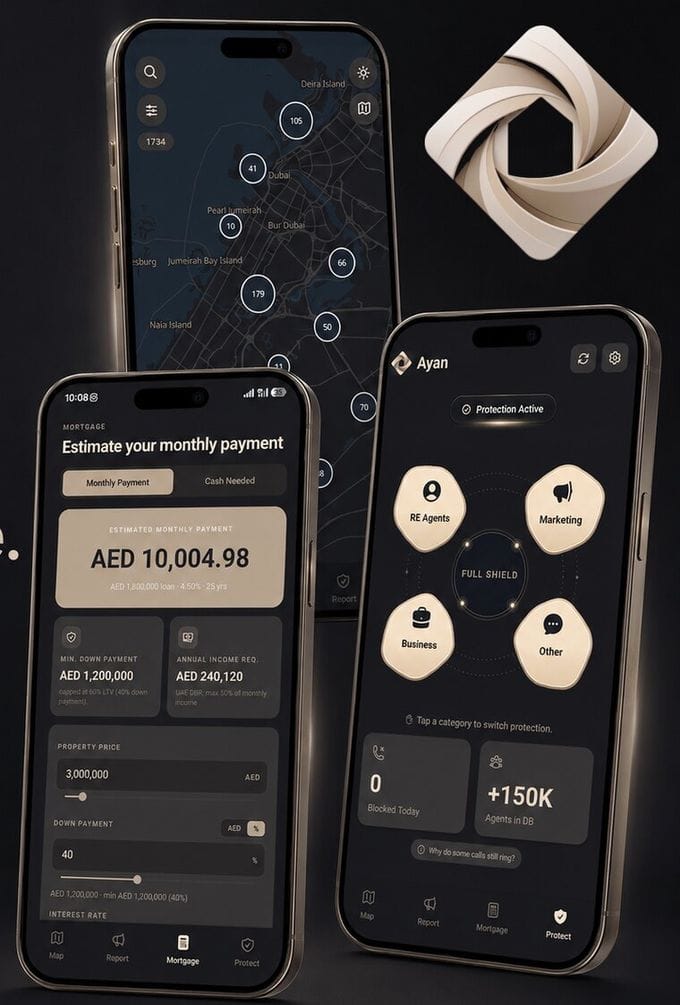
A live off-plan map of 1,700+ UAE projects, a full UAE mortgage calculator and OS-level spam-call protection, all in one app.
Get the AYAN app →Or go straight to the App Store or Google Play. On a computer? Open map.YAZDAN in your browser, no download needed.
YAZDAN Properties reads the DLD numbers for your goal, whether you're buying, selling or investing, and tells you plainly what they mean for you.
Book a 30-minute advisory call → WhatsApp usOr email info@yazdan.ae directly.