30-SECOND READ — IS THIS FOR YOU?
In one line. Palm Jumeirah recorded 273 ultra-luxury transactions in May 2026 at an average price of $11.9 million (AED 43.9 million) — the highest of any Dubai area — led by a Crescent six-bedroom villa that traded for AED 300 million ($81.7M), confirming the Palm as Dubai’s deepest ultra-prime market by some distance.
Best for. Ultra-prime buyers considering Palm vs alternatives, existing Palm holders weighing exit timing, and observers tracking where ultra-prime capital actually concentrates.
What you will learn.
• The full May 2026 ultra-prime concentration data, with the AED 300M Crescent benchmark
• The four ultra-prime sub-markets behind Palm: Jumeirah First, La Mer, Dubai Water Canal
• Why Palm depth is structural, not cyclical — and where the premium realistically holds
Bottom line. Palm Jumeirah is the world’s deepest, most-traded ultra-prime market in 2026. The depth is the moat; pricing power follows the depth.
IN THIS ARTICLE
- The May 2026 Ultra-Prime Concentration
- Three Things the Palm Number Reveals
- The Ultra-Prime Choice Set Beyond Palm
- How to Decide From Here
 Noor Al Nahyan
The May 2026 Ultra-Prime Concentration
Gulf Business’s May 2026 market read, alongside Bayut’s Palm Jumeirah transaction data and Knight Frank’s Q4 2025 base, established that Palm Jumeirah’s ultra-prime concentration is a category leader globally, not just regionally. The 273 ultra-luxury transactions recorded in May at an average price of $11.9 million ($AED 43.9 million) led every Dubai area for the month — and ran ahead of every comparable global prime market on volume at that price tier. The
Crescent record. A six-bedroom Crescent villa traded for $81.7 million (AED 300 million) in May, the headline ticket of the month and one of the higher-priced single Palm transactions on record. Crescent villas have been a Palm price-discovery proxy for some years; a AED 300M sale firmly resets the high-water mark.
Persistent Palm momentum. Knight Frank’s Q4 2025 Dubai Residential Market Review showed Palm Jumeirah at +31% YoY average sold price growth through 2025 — the highest of any major global prime location. The May 2026 figures suggest the segment has carried the momentum into the current year, with transaction velocity holding even as the wider Dubai market normalised from peak.
Dubai Ultra-Prime — May 2026 by Area
Three Things the Palm Number Reveals
The 273 transactions and $11.9M average together tell a structural story about how ultra-prime capital actually positions in Dubai.
• Depth is the moat. 273 monthly transactions at $11.9M average is a category-leading volume globally. London prime, Monaco, Hong Kong prime do not match this ticket-size velocity. The depth means buyers find liquidity when they want to enter and sellers find depth when they want to exit — both directions, which most prime markets cannot offer at this tier.
• Brand and waterfront concentration. Palm Jumeirah’s brand is now mature and globally recognised at the ultra-prime tier. The Crescent and outer fronds carry the highest velocity within Palm; the trunk apartments operate as a different sub-segment with different pricing dynamics. Buyers should understand which Palm they are buying — the brand premium is concentrated.
• Limited supply locks the premium. Crescent and outer-frond villas are essentially built out. New construction at this tier is limited and typically branded residences rather than fresh villa stock. The supply moat means a buyer pool that doubles or halves in size matters far more than a supply pipeline shift — and the buyer pool, on the May data, is still growing rather than thinning.
"273 monthly transactions at $11.9M average is not a market; it is a category. Palm Jumeirah is the deepest ultra-prime market in the world by velocity in 2026, and the depth is what defines the moat."
— YAZDAN RESEARCH
The Ultra-Prime Choice Set Beyond Palm
The May data established Palm as the dominant ultra-prime venue, but the segment has depth across several other sub-markets each with distinct character.
Emirates Hills. The longest-established prime villa community. No new supply — the moat is structural rather than brand-led. Resale liquidity tighter than Palm because the absolute number of properties is lower. Suited to buyers prioritising privacy, established neighbourhood character, and the deepest land-bank moat in Dubai.
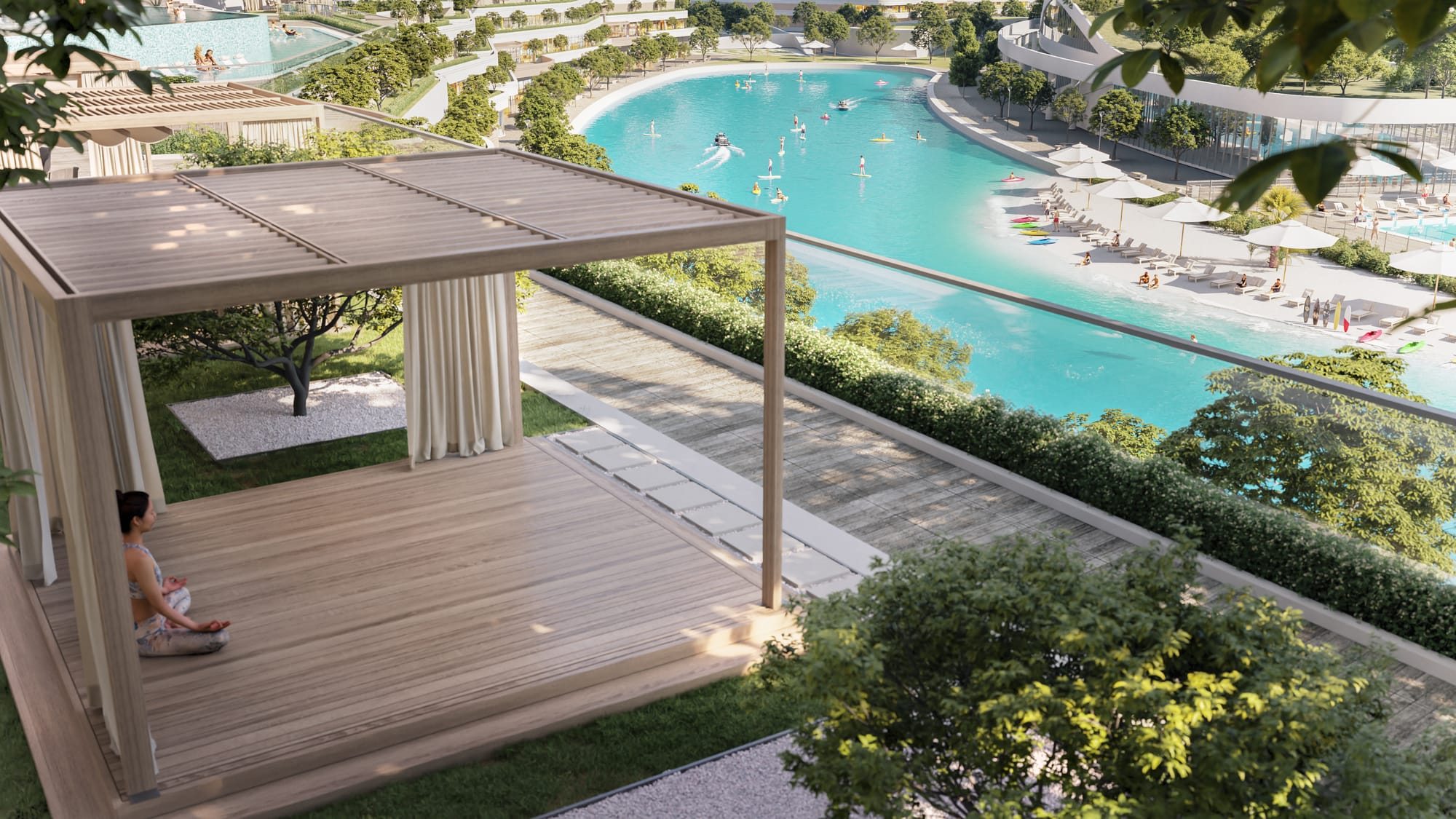
District One. Gated, master-planned, more recent. The crystal lagoon is the signature differentiator. Buyer profile leans younger than Emirates Hills, more international. Premium achievable solid; resale track record still building.
Jumeirah Bay Island. Branded residence concentration (Bvlgari, etc.) on a constrained island footprint. Ticket sizes high; volume lower than Palm. Suited to brand-focused buyers willing to accept narrower resale liquidity for the constrained-island moat.
Tilal Al Ghaf. Newer, lower-density master-plan by Majid Al Futtaim. Land bank constrained but pipeline still active. The Lagoon villas are the most-traded Tilal sub-segment. Premium positioned middle of the ultra-prime band; suited to longer-hold buyers.
Jumeirah First and Dubai Water Canal corridor. The Solaya 5 (AED 112.6M) and Aman Residences (AED 83.2M) deals confirm continued activity in this corridor. Distinct from Palm in character — more mainland prime, with hospitality-brand residences increasingly featured. The May Solaya transaction is a meaningful signal that this segment continues to scale alongside Palm.
How to Decide From Here
Three rules for ultra-prime buyers and existing holders given the current concentration data.
• Choose the Palm sub-segment, not just the Palm. Crescent villas, outer-frond villas, trunk apartments, and Palm branded residences all behave as different sub-markets. The Crescent is the deepest and most-traded; outer fronds offer the constrained-supply moat at slightly lower ticket sizes; trunk apartments are a different yield-and-resale-pool decision. Specify which Palm you are buying.
• Plan a 5-10 year hold. Ultra-prime resale at this tier rewards patience. The buyer pool is global, mobile, and not always synchronised with Dubai-specific cycles. A patient seller in this segment captures the brand and scarcity premium reliably; a hurried seller often does not.
• Diversify across two prime sub-markets at scale. For investors with USD 25M+ in ultra prime deployable capital, a Palm position plus a Emirates Hills, District One, or Jumeirah Bay Island position captures structurally different exposures within the same segment. Concentration in a single sub-market is the unforced choice at this scale.
 Noor Al Nahyan
Frequently Asked Questions
Why is Palm Jumeirah dominating Dubai ultra-prime in 2026?
Depth and brand. 273 monthly transactions at $11.9M average ticket led every Dubai area in May 2026. Brand recognition is mature globally, supply is structurally constrained on the Crescent and outer fronds, and the buyer pool is broad enough to absorb both entry and exit at this ticket size — rare globally at the ultra-prime tier.
What was the headline May Palm transaction?
A six-bedroom Crescent villa at $81.7 million (AED 300 million) — the month’s highest single Dubai deal and a record-territory print for the segment. Crescent villas have served as a Palm price discovery proxy for years; the figure resets the high-water mark.
Should I buy on the Crescent, an outer frond, or a Palm apartment?
Different sub-segments. Crescent is the deepest and most-traded, with the highest ticket sizes and brand prestige. Outer fronds offer constrained-supply moats at slightly lower entry. Palm apartments behave as a different segment — investment-led, yield-relevant. The right answer depends on whether the priority is appreciation, yield, or lifestyle.
Is Palm the only ultra-prime venue worth considering?
No — Emirates Hills, District One, Jumeirah Bay Island, Tilal Al Ghaf Lagoons, and the Jumeirah First / Dubai Water Canal corridor (where Solaya 5 and Aman Residences sit) all operate as legitimate ultra-prime venues with distinct character. Palm has the deepest volume but is not the only path.
What is the realistic hold horizon for Palm ultra-prime?
5-10 years captures the brand-and-scarcity moat plus currency hedging benefits. Shorter holds expose the buyer to liquidity risk on resale, despite the depth, because the buyer pool can synchronise around external events (geopolitical, currency-driven, sanctions-related).
SOURCES CITED IN THIS ARTICLE
Gulf Business — Dubai property market cooled in May, investor hotspots
Bayut — Palm Jumeirah sale transactions market analysis
Gulf News — Dh654 million off-plan luxury apartment on Palm Jumeirah Knight
Frank UAE — Dubai Residential Market Review Q4 2025
Palm Observer — Palm Jebel Ali property prices and trends
Want a tailored read for your own position?
YAZDAN Properties advises ultra-prime buyers on Palm sub-segment selection and broader Dubai ultra-prime allocation. Data-led, neutral, no commission talk.
Book a 30-minute advisory call →Or email info@yazdan.ae directly.
This article is editorial analysis. May 2026 data; ultra-prime tickets may have moved since publication.
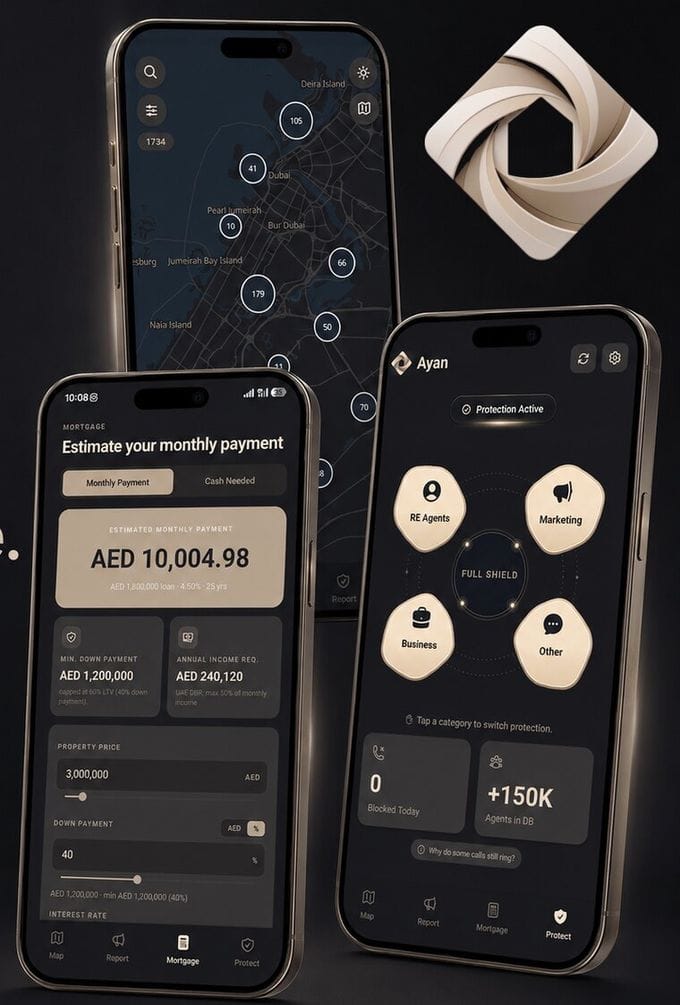
A live off-plan map of 1,700+ UAE projects, a full UAE mortgage calculator and OS-level spam-call protection, all in one app.
Get the AYAN app →Or go straight to the App Store or Google Play. On a computer? Open map.YAZDAN in your browser, no download needed.
YAZDAN Properties reads the DLD numbers for your goal, whether you're buying, selling or investing, and tells you plainly what they mean for you.
Book a 30-minute advisory call → WhatsApp usOr email info@yazdan.ae directly.