30-SECOND READ — IS THIS FOR YOU?
In one line. Knight Frank forecasts +3% prime price growth versus +1% mainstream in 2026 — Dubai closed 2025 as the world’s #1 market for $10M+ homes (500 deals, 143 in Q4 alone), even as 85% of the upcoming supply pipeline is mid-market apartments facing oversupply pressure.
Best for. Investors deciding where to allocate fresh capital, and existing holders weighing whether to rotate between mid-market and prime exposure.
What you will learn.
• The Knight Frank price-growth forecast by segment, with the underlying data
• Why the supply pipeline mix (85% apartments vs 1% branded) drives the bifurcation
•How to position across the two speeds — pure prime, pure mid-market, or a barbell
Bottom line. The Dubai market is no longer one market. The right allocation depends on whether your objective is yield (mainstream), appreciation (prime), or both via a deliberate barbell.
IN THIS ARTICLE
- The Two Speeds, Quantified
- Three Forces Driving the Bifurcation
- How to Position Across Both Speeds
- What Would Move This Next
The Two Speeds, Quantified
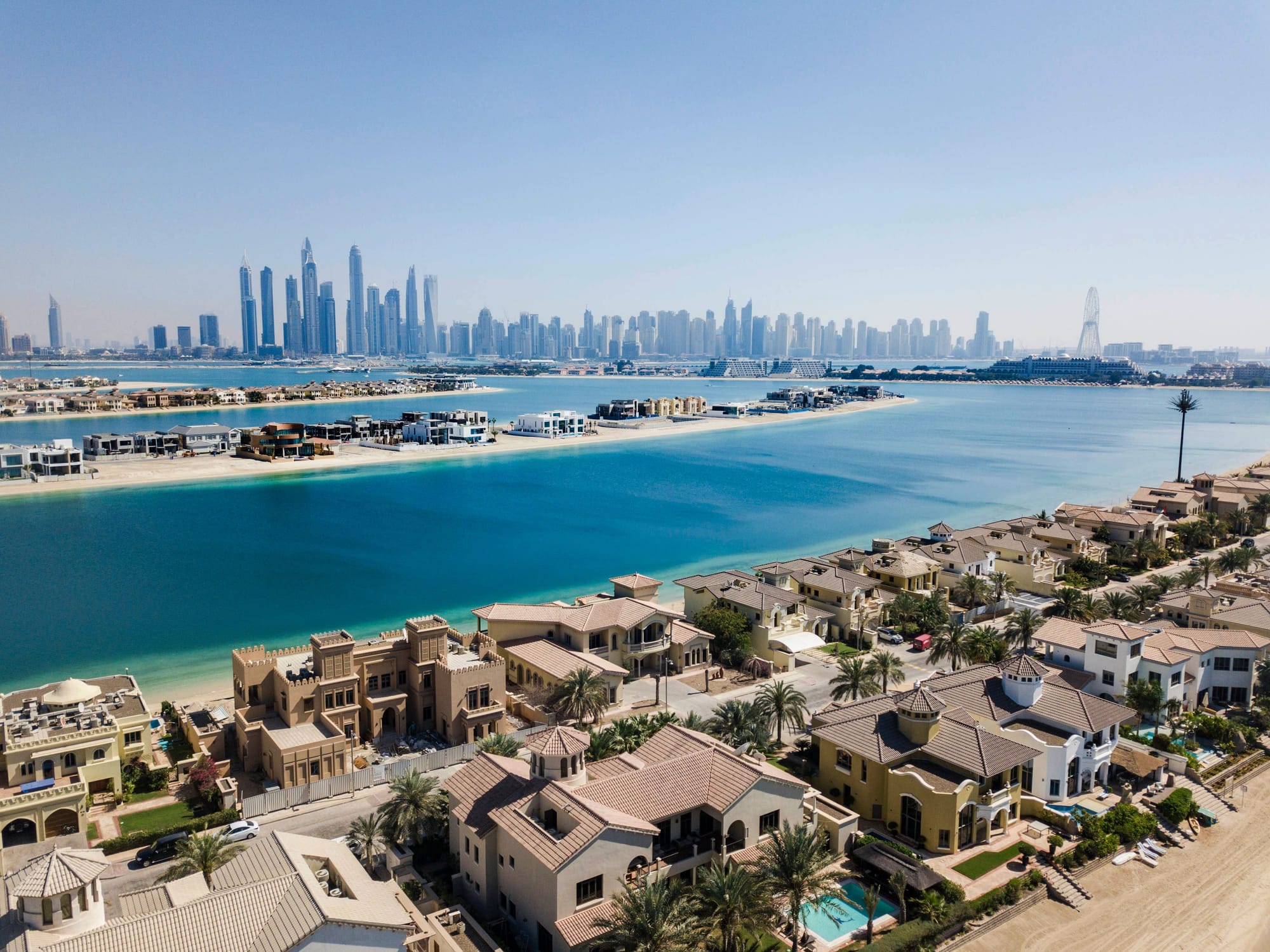
The Two Speeds, Quantified The Knight Frank Q4 2025 Dubai Residential Market Review — the source most cited in Arabian Business’s reporting and in industry commentary across Pangea, LD Real Estate, and Economy Middle East — lays out the divergence in clear numbers. Prime, the segment defined by Palm Jumeirah, Emirates Hills, District One, and Jumeirah Bay Island, is expected to grow approximately 3% in 2026. Mainstream apartments — the wider mid-market pool that includes JVC, Business Bay, Marina apartments, and Dubai South — are forecast to average around 1% growth across the year.
Ultra-luxury, distinct from prime, is the standout. Dubai cemented its position as the world’s number-one market for properties above $10 million in 2025, with 500 deals over the year and 143 in Q4 alone (Knight Frank Q4 2025). That is one $10M+ transaction every business day across the quarter, a velocity no other prime global market matched. The trophy and ultra-prime segment behaves as a separate market from mainstream Dubai and is the segment driving the headline luxury growth narrative.
The mid-market faces a different gravity. Apartments account for 85% of Dubai’s forecast supply pipeline for the next 18-24 months, versus just 14% for villas and 1% for branded apartments (Knight Frank). That supply tilt is what produces the 1% growth forecast — mainstream rent and price growth are absorbing real new supply, which is structurally different from the prime segment where new supply is genuinely scarce.
Dubai 2026 Price-Growth Forecast vs Supply Tilt (Knight Frank Q4 2025)
| Segment | 2026 Forecast | Share of Supply Pipeline |
|---|---|---|
| Prime Palm, Emirates Hills, District One | +~3% | 14% (villas) |
| Mainstream | +~1% | 85% |
| Branded residences | Outperforming prime | 1% |
| Ultra-luxury ($10M+) | Outperforming prime | Bespoke, structurally scarce |
Three Forces Driving the Bifurcation
The two speeds are not random — they reflect three structural forces working in different directions across the two segments.
• Supply scarcity vs supply absorption. The luxury and ultra-prime segment is structurally supply-constrained — Palm Jumeirah, Emirates Hills, and District One are essentially built out or have constrained land banks. The mid-market apartment pipeline, in contrast, is delivering tens of thousands of new units across 2026-2027 in JVC, Dubai South, MBR City, and other absorbing communities. Same Dubai, two different supply realities.
• Buyer profile divergence. Mainstream Dubai buyers are price-sensitive — the marginal AED 100,000 changes the decision. Ultra-prime and branded-residence buyers are not shopping by price per square foot. The two buyer pools respond to different signals: mortgage rates and supply move the mid-market; wealth migration, lifestyle factors, and currency hedging move the prime segment.
• Branded residences as a distinct asset class. Branded residences — where a recognised hospitality or design brand attaches to the asset — have moved from niche to core part of the Dubai luxury landscape. The brand premium attracts a buyer profile that lives outside the mainstream price-discovery dynamic, and the limited supply (1% of pipeline) sustains the premium even as mainstream stock floods the market.
"Dubai’s market is no longer moving as a single entity. Prime assets
continue to attract demand and command scarcity premiums; the mid
market wades through a real supply wave. Allocating to ‘Dubai’ without
specifying which Dubai is now a meaningfully different decision."
— YAZDAN RESEARCH
Sizing a Dubai allocation across both speeds?
30 minutes with our advisory team — we model prime, mainstream, and barbell positioning against your hold horizon.
How to Position Across Both Speeds
Three honest framings for capital allocators given the two-speed dynamic.
• Pure prime allocation. For investors prioritising capital appreciation, currency hedging, and lifestyle exposure, the prime segment remains the strongest absolute play in 2026. Palm Jumeirah, Emirates Hills, District One, and selected branded residences in waterfront locations have the supply moat to defend the +3% (or potentially higher) growth thesis. Yield is not the case — 3-5% gross is normal for prime globally. Hold horizon: 5-10 years.
• Pure mainstream allocation. For investors prioritising current income, the mid-market still offers the most accessible yield (6-8% gross in JVC, Business Bay, Dubai South). The +1% forecast on price is the headline weakness, but yield is what drives the case anyway. Underwrite on the lower yield band, choose the higher-quality buildings, expect modest price appreciation alongside the income compound.
• Barbell allocation. For investors with AED 8M+ deployable, a deliberate barbell — 60-70% mid-market for yield and current income, 30-40% prime or branded for appreciation and hedging — captures both market dynamics. The structure also produces a more defensible portfolio in a soft-cycle window because the prime sleeve protects capital while the mid-market sleeve produces cash. Most institutional allocators size their Dubai exposure this way.
What Would Move This Next
The bifurcation reflects current supply and buyer dynamics. Three variables would close, widen, or reshape the gap over the next 12-18 months.
Mid-market absorption pace. If the 85%-apartment pipeline absorbs faster than expected (driven by foreign buyer flow, Golden Visa rule changes, mortgage accessibility), mainstream price growth could exceed the 1% forecast and the gap narrows. Conversely, if buyer fatigue meets supply, mainstream forecasts get cut and the gap widens.
Wealth migration trajectory. Continued ultra-high-net-worth inward migration — the structural driver of the $10M+ segment’s velocity — is the prime market’s underlying force. UAE attracted record numbers of ultra-wealthy individuals in 2024-2025; if 2026 continues that pace, the prime segment’s +3% forecast may prove conservative.
Branded residence supply. At 1% of pipeline, branded residences are the scarcest sub-segment. Material new launches would test how much premium the segment commands in a slightly less constrained supply environment — whether the brand moat holds, or whether mid-tier brands face the same supply pressure as mainstream stock.
 Noor Al Nahyan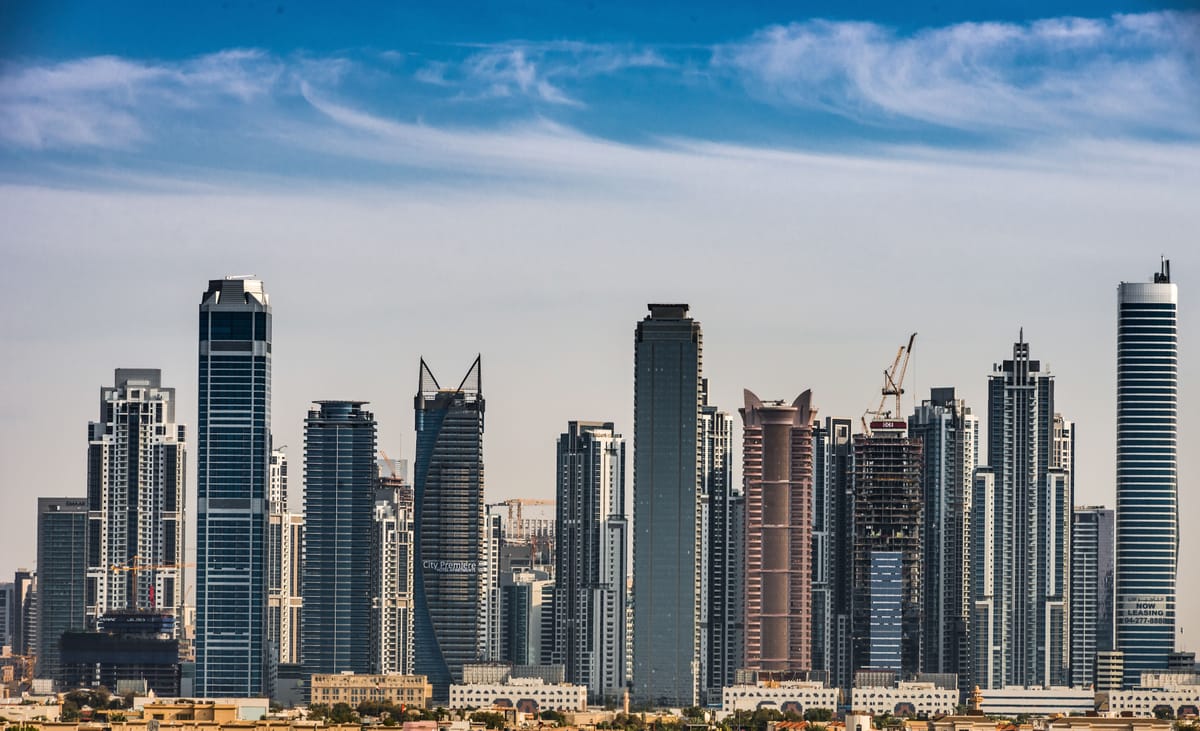
Frequently Asked Questions
What does Knight Frank’s 3% vs 1% forecast mean for investors?
It quantifies the bifurcation. Prime is expected to outperform mainstream by roughly 200 basis points in 2026 price growth. The same Dubai allocation behaves differently depending on which segment you choose.
Is Dubai luxury still a good investment in 2026?
Yes, particularly in supply-constrained sub-markets (Emirates Hills, Palm Jumeirah, District One) and in branded residences. The $10M+ segment cleared 500 deals in 2025 — world-leading velocity. Hold horizon should be 5-10 years to capture the full appreciation thesis.
Should I avoid mainstream Dubai apartments?
No — mainstream still offers the most accessible 6-8% gross yields in the city. The forecast caveat is on price growth (~1%), not on yield. For yield-focused investors, mainstream remains the right segment provided you underwrite at the lower yield band and pick high-quality buildings.
Are branded residences worth the premium?
For appreciation-focused, longer-hold investors, increasingly yes. At 1% of pipeline supply with a recognised global brand attached, branded residences sustain pricing power that mainstream stock cannot. Yield is structurally lower; appreciation thesis is the case.
What is a barbell allocation in Dubai property?
60-70% in mid-market for yield, 30-40% in prime or branded for appreciation. The structure captures both Dubai dynamics and produces a more defensible portfolio in soft-cycle windows. Most institutional Dubai allocators structure exposure this way.
SOURCES CITED IN THIS ARTICLE
• Knight Frank UAE — Dubai Residential Market Review Q4 2025
• Arabian Business — Dubai property market running at two speeds as luxury homes outperform
• Economy Middle East — Dubai real estate market eyes 160,000 new units in 2026
• Pangea — Dubai’s Prime Property Momentum Sets the Tone for a Measured 2026
• Gulf News — UAE to attract more ultra-wealthy by 2031 as Dubai luxury property booms
YAZDAN tools worth bookmarking
• YAZDAN Off-Plan Map — browse every current off-plan project across the UAE on one live map
• AYAN app — YAZDAN’s companion app for investors and buyers
Want a tailored read for your own position?
YAZDAN Properties advises on prime, mainstream, and barbell Dubai allocation. Data-led, neutral, no commission talk.
Book a 30-minute advisory call →Or email info@yazdan.ae directly.
This article is editorial analysis. Knight Frank forecasts cited reflect Q4 2025 publication; market may have moved since publication.