30-SECOND READ — IS THIS FOR YOU?
In one line. Indian buyers led Dubai foreign demand at 22% of all sales in 2025 (up from 21% in 2024), British surged to 17% on UK non-dom tax abolition, Chinese returned to 14% post-travel restrictions, Saudi held 11%, Russian held 9% — with each buyer profile shifting what and where they actually purchase.
Best for. Developers shaping product mix, sellers positioning against the dominant buyer profiles, and observers tracking the structural composition of Dubai capital inflows.
What you will learn.
• The 2025 nationality shares and the structural drivers behind each
• How Indian buyer behaviour is shifting from yield-focused to lifestyle and Golden Visa
• Why the UK non-dom abolition is producing a multi-year-high British inflow
Bottom line. The Dubai foreign-buyer pool is wider and more durable than the 2022 peak. Concentration risk has reduced; structural drivers from the UK, China, and India are each running their own multi-year story
IN THIS ARTICLE
- Top Nationalities by Share
- What Each Buyer Profile
- Is Buying Three Structural Shifts Worth Tracking
- How to Read This For Your Position
Top Nationalities by Share
The 2025-into-2026 buyer composition, drawn from Unique Properties, Veersant, EPLog Off-Plan, dxbinteract, and Benhams’ foreign-buyer analyses, gives a clean picture of which capital flows actually drive Dubai. The top five nationalities account for roughly 73% of all foreign-buyer transactions; the remaining 27% spreads across GCC, European, North American, and Asian sources.
Dubai Foreign Buyer Share by Nationality (2025)
| Nationality | 2025 Share | Structural Driver |
|---|---|---|
| 🇮🇳 India | 22% ↑ from 21% | Lifestyle demand, attractive rental yields, and the continued appeal of the Golden Visa. |
| 🇬🇧 United Kingdom | 17% Multi-year high | Abolition of the UK non-dom tax regime has encouraged greater overseas property investment. |
| 🇨🇳 China | 14% | Recovery in outbound investment following the easing of travel and capital restrictions. |
| 🇸🇦 Saudi Arabia | 11% | Growing GCC mobility and regional portfolio diversification. |
| 🇷🇺 Russia | 9% | Wealth preservation strategies and sanctions-driven capital allocation. |
| 🌍 Other (73 Nationalities) | 27% | Broad and diversified international demand from buyers across more than 70 nationalities. |
What Each Buyer Profile Is Buying
Indians (22%). The structural shift inside the Indian buyer profile is the under-reported story. Indians have moved from purely yield-focused investment to a hybrid pattern: primary residences and family bases alongside investment properties. The AED 2M Golden Visa pathway, with February 2026 rule changes making mortgaged and combined-portfolio qualification accessible, accelerated this shift materially. Indian buyers now favour 2-3 bedroom apartments in JVC, Business Bay, Dubai Marina, and Downtown — the family-suitable end of the market — alongside the high-yield JVC and Arjan studio plays that defined the earlier Indian wave.
British (17%). The UK non-dom tax regime abolition (effective April 2025) is the single largest driver of the British surge. High-net-worth individuals reassessing where to reside and invest have brought a meaningful share of UK wealth to Dubai over the past 18 months. British buyers concentrate in Palm Jumeirah, Downtown, Dubai Marina, and JVC — spanning lifestyle and yield positions. Average ticket sizes have risen with the high-net-worth tilt of the inflow.
Chinese (14%). Post-travel-restriction recovery, with Chinese buyers re-engaging Dubai as a luxury, hospitality, and commercial gateway. Chinese capital concentrates in Palm Jumeirah luxury, Downtown branded residences, and increasingly the commercial office segment (which saw 203% YoY growth in Q1 2026). The Chinese return is more recent than the Indian and British inflows but has been the fastest-accelerating share recently.
Saudi (11%). Regional mobility and intra-GCC diversification. Saudi buyers concentrate in prime and ultra-prime: Palm Jumeirah, Emirates Hills, Downtown. Ticket sizes are generally high. The Saudi flow is structurally steady rather than dramatically growing — consistent demand from an established buyer base.
Russian (9%). Wealth-preservation and lifestyle-refuge motivations. Russian buyers concentrate in Palm Jumeirah, Marina, and Downtown. The share has held steady at around 9% for two years, reflecting structural Russian capital presence in Dubai rather than further inflow growth at the headline level.
 Noor Al Nahyan
Three Structural Shifts Worth Tracking
The headline shares matter less than the structural shifts driving them. Three are worth flagging.
• Buyer pool diversification reduces concentration risk. The 2022 Dubai cycle was heavily concentrated in a narrow set of origin markets. The 2025-2026 mix — Indian + UK + Chinese together at 53%, with the rest spread — is structurally wider. A shock to any single origin market is less catastrophic to the overall buyer pool. This is positive for both pricing stability and resale liquidity.
• Lifestyle and residency motivations are rising vs pure investment. The Golden Visa pathway, particularly with the February 2026 rule changes, has shifted meaningful Indian, British, and increasingly Chinese capital toward properties that work as primary residences or family bases. This buyer pool is structurally less reactive to short-term cycle movements than the pure-investment cohort — absorbing supply more durably and reacting to soft windows with less reversal.
• The Chinese return is the largest acceleration to watch. Chinese 14% is up from a much lower base post-restriction. If the trajectory continues, China could match or exceed UK share within 18-24 months — with implications for product mix (luxury, branded, commercial) and pricing power at the high end. The structural drivers (Vision China policy posture, Dubai as a global trade gateway) suggest the trend continues rather than reverts.
"The Dubai foreign-buyer pool is wider and more durable than the 2022 peak. Indians shifted from yield to lifestyle; British arrived on tax-driven displacement; Chinese returned post-restriction. Three different multi-year stories running simultaneously — that is a more resilient demand base than any single-driver cycle." — YAZDAN RESEARCH
Want a tailored read for your own position?
YAZDAN Properties is a Dubai-based real-estate advisory firm. We work with international and UAE-based investors on neutral, data-led reviews — no pressure, no commission talk, just a clear look at the numbers.
How to Read This For Your Position
Three practical implications for sellers, developers, and investors.
• For sellers: know which buyer pool your unit targets. A 1-bedroom JVC apartment competes for Indian and Chinese investor demand. A 3-bedroom Downtown apartment targets Indian and British family buyers. A Palm Jumeirah villa competes for British, Saudi, Russian, and Chinese ultra-prime capital. Marketing presentation and pricing should reflect the specific buyer pool the unit actually targets.
• For developers: product mix matters more than ever. The shift toward lifestyle and family suitable units, driven by Indian, British, and Chinese profiles, favours 2-3 bedroom inventory over studios. The First-Time Home Buyer Program adds upward pressure on entry-tier inventory. Developers reading the demographic data are already adjusting; those still building yield-focused studio-heavy mix are increasingly mismatched against where demand is going.
• For investors: the buyer-pool diversification supports liquidity at exit. The wider, more diversified buyer pool is structurally positive for resale liquidity. A 5-year hold today is supported by a more durable demand foundation than the same hold five years ago. This is a quiet but meaningful upgrade to the long-hold investor case.
 Noor Al Nahyan
Frequently Asked Questions
Who are the top buyers of Dubai property in 2025-2026?
Indians lead at 22%, followed by British at 17% (multi-year high), Chinese at 14%, Saudi at 11%, and Russian at 9%. The remaining 27% spreads across roughly 73 other nationalities — a wide and diversified composition compared to earlier cycles. Why are British buyers surging? UK non-dom tax abolition (effective April 2025). High-net-worth UK individuals reassessing residence and investment have brought a meaningful share of UK wealth to Dubai. The British share rose to 17% in 2025, the highest in several years.
Are Indian buyers changing what they purchase?
Yes — the structural shift inside the Indian buyer profile is from yield-focused investment toward primary residences, family bases, and Golden Visa qualification. 2-3 bedroom family-suitable apartments now feature alongside the older yield-focused 1-BR positions.
Is the Chinese return sustainable?
The structural drivers (post-restriction recovery, Dubai as a global trade gateway, Chinese policy posture) suggest the trend continues. China is the fastest-accelerating buyer share currently and could match or exceed UK share within 18-24 months.
How does buyer diversification affect investor risk?
Positively. A wider buyer pool reduces concentration risk — a shock to any single origin market is less catastrophic to overall demand. The 2025-2026 mix is structurally more resilient than the 2022 peak cycle, supporting both pricing stability and resale liquidity over multi-year holds.
SOURCES CITED IN THIS ARTICLE
• Unique Properties — Top Nationality Buyers in Dubai: Who’s Driving the Market in 2026
• EPLog Off-Plan — Who Invests Most in Dubai Real Estate 2026
• Veersant — Dubai Property Buyers by Nationality: 2025 Complete Breakdown
• dxbinteract — Buyers’ Nationalities in Dubai Property Market: The Truth
• Benhams — Who’s Buying Property in Dubai? Top Buyer Nationalities in 2025
Want a tailored read for your own position?
YAZDAN Properties advises sellers and developers on positioning against the dominant buyer profiles, and investors on the buyer-pool diversification thesis. Data-led, neutral, no commission talk.
Book a 30-minute advisory call →Or email info@yazdan.ae directly.
This article is editorial analysis. Buyer-share figures reflect 2025-2026 data; shares may continue to evolve
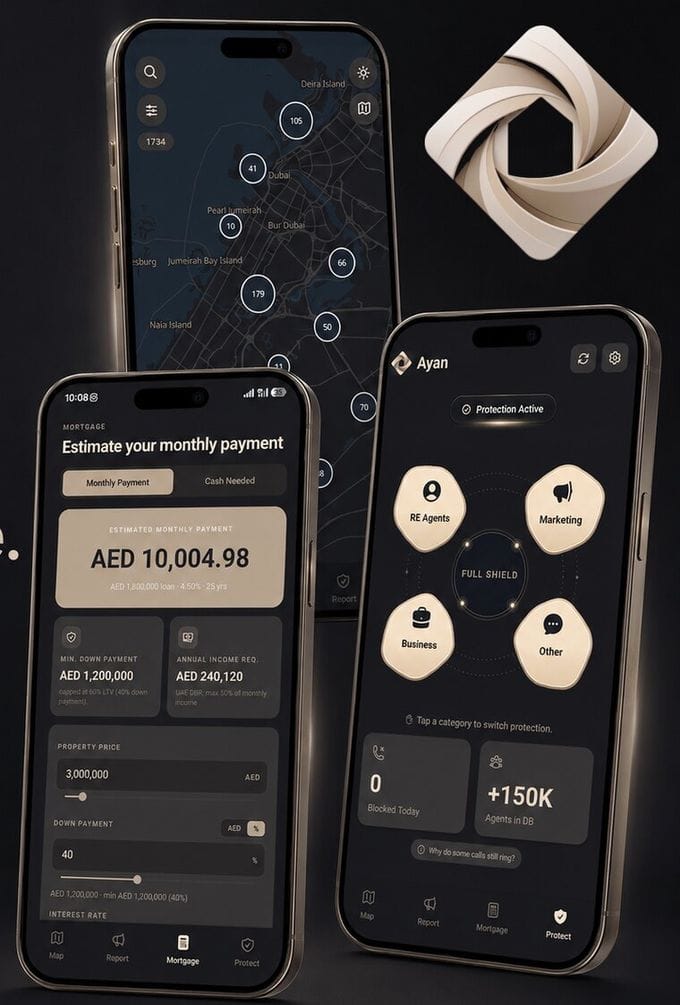
A live off-plan map of 1,700+ UAE projects, a full UAE mortgage calculator and OS-level spam-call protection, all in one app.
Get the AYAN app →Or go straight to the App Store or Google Play. On a computer? Open map.YAZDAN in your browser, no download needed.
YAZDAN Properties reads the DLD numbers for your goal, whether you're buying, selling or investing, and tells you plainly what they mean for you.
Book a 30-minute advisory call → WhatsApp usOr email info@yazdan.ae directly.